Define one object
Write a compact description with the subject, materials, silhouette, and useful visual constraints.
Focused model access
Trellis huggingface is a useful entry point when you want to inspect a model-focused workflow before committing to a broader 3D creation process. Start with a clear object description, review the result, and decide whether the workflow fits your project.

How the route works
The focused route keeps the first pass simple: describe an object, inspect the generated result, and refine only what matters.
Write a compact description with the subject, materials, silhouette, and useful visual constraints.
Check the shape, proportions, visible surfaces, and overall interpretation before adding more detail.
Keep the result for concept work, revise the prompt, or move to a broader workflow for deeper iteration.
Practical applications
This focused workflow is most useful when you need a quick model reference, a controlled experiment, or a clear way to evaluate a generation path.
Turn a short visual idea into a rough object reference before opening a full sculpting workflow.
You get a concrete shape to review with a team or use as a starting point for visual exploration.
trellis demoTest how a model interprets materials, proportions, and simple geometry from structured text.
You can compare prompt changes without mixing the experiment with a larger production pipeline.
trellis githubCreate an early prop concept for a prototype when the final asset specification is not settled.
A visible model helps you judge scale, silhouette, and style before investing in production assets.
trellis demoUse one object at a time to understand how descriptions affect generated form and surface detail.
The smaller scope makes it easier to identify what changed between attempts and what needs refinement.
trellis githubVisual checkpoint
Treat the first output as a visual checkpoint rather than a finished asset. The comparison makes it easier to discuss what the prompt captured and what it missed.
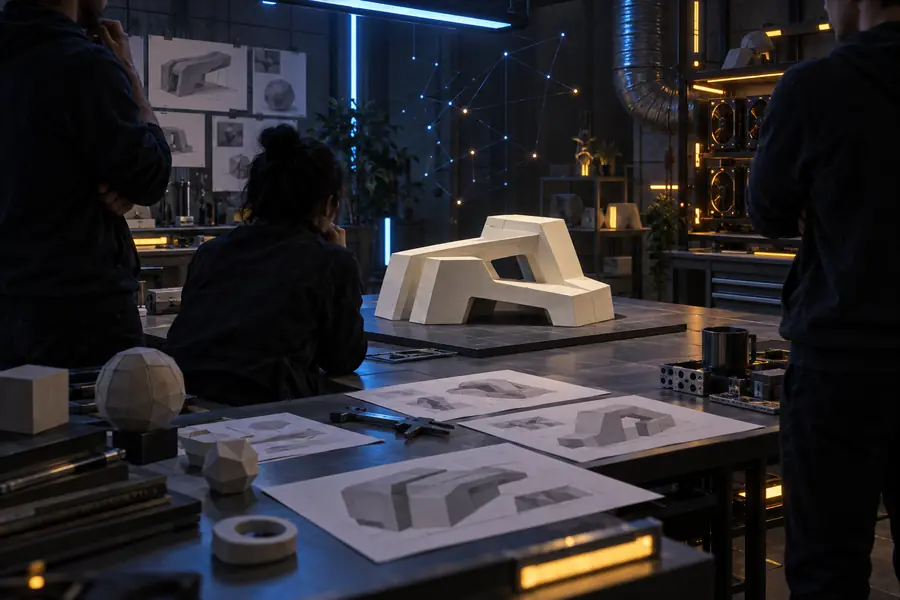

Compare silhouette first, then materials and smaller details.
Keep exploring
A focused model entry point is not the same as a complete asset-production pipeline. These related pages help you understand the surrounding options without losing the original goal.
See the workflow presented as a practical demonstration from prompt to model.
Review the code-oriented route for understanding implementation and model context.
Compare a broader text-driven approach for turning descriptions into 3D concepts.
Use a visual reference when describing the object in words is not enough.
Route comparison
Use the comparison to decide whether a focused model page is enough for your task or whether you need a broader creation surface.
Focused model entry
A concise description of one object
General 3D workflow
Text, images, or a larger creative brief
Focused model entry
Evaluate a model path and its output
General 3D workflow
Move from idea toward a more complete asset workflow
Focused model entry
Silhouette, proportions, and basic material cues
General 3D workflow
Style exploration across several references
Focused model entry
Small, controlled prompt changes
General 3D workflow
Broader revisions across inputs and outputs
Focused model entry
Useful for references and early concepts
General 3D workflow
Better suited to workflows requiring additional cleanup
Focused model entry
Low initial complexity
General 3D workflow
More choices to understand before the first result
Focused model entry
Someone evaluating a model-focused route
General 3D workflow
Someone building a repeatable creation process
Focused model entry
It does not replace modeling, retopology, or final asset checks
General 3D workflow
It still requires review before production use
Start with one idea
Describe one object with enough detail to make the result easy to judge, then use the output as a reference for your next decision. A narrow first experiment gives you better feedback than an overloaded prompt.
Common questions
These answers clarify what people usually want to know when searching for this model-focused entry point.
It refers to a focused way to explore the Trellis 3D generation workflow through a model-oriented entry point. It is useful for testing object descriptions and reviewing early 3D concepts before choosing a broader workflow.
No. The model-focused route emphasizes evaluation and experimentation, while a general experience may provide more surrounding tools or workflow choices. The right option depends on whether you are testing the model or building a larger creation process.
Start with one object and describe its recognizable shape, material, style, and important proportions. Adding a few concrete visual constraints is usually more useful than writing a long description with unrelated details.
You should treat an initial result as a concept or working reference until it has been checked for topology, proportions, materials, and the requirements of your target application. Additional cleanup may be needed before production use.